




The jewels in your wishlist are waiting to belong to you
DIY UAV drone video data radio link module IP TTL Sbus
DIY UAV drone video data radio link module IP TTL Sbus

I promise you these earrings are so versatile that they will light-up any outfit!
$ 92.65
Additional information
| Dimension | Earring Length: 3 inches |
|---|---|
| Fastening | Push back |
| Finish | Gemstones, Oxidised |
| Material | 925 Silver and Baroque Pearls |
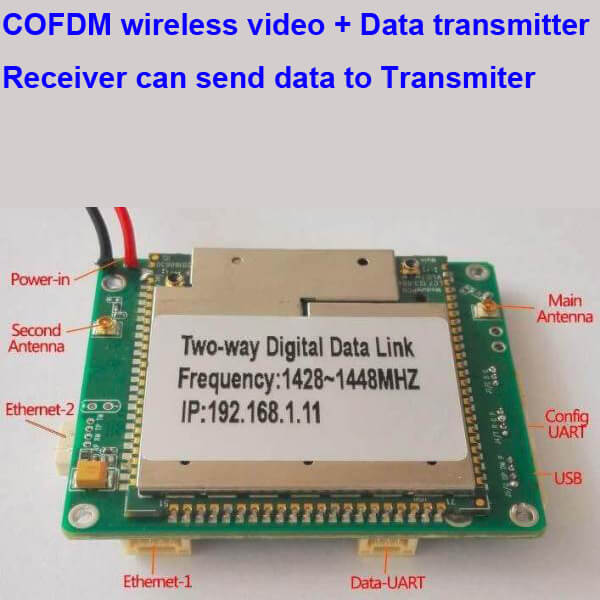
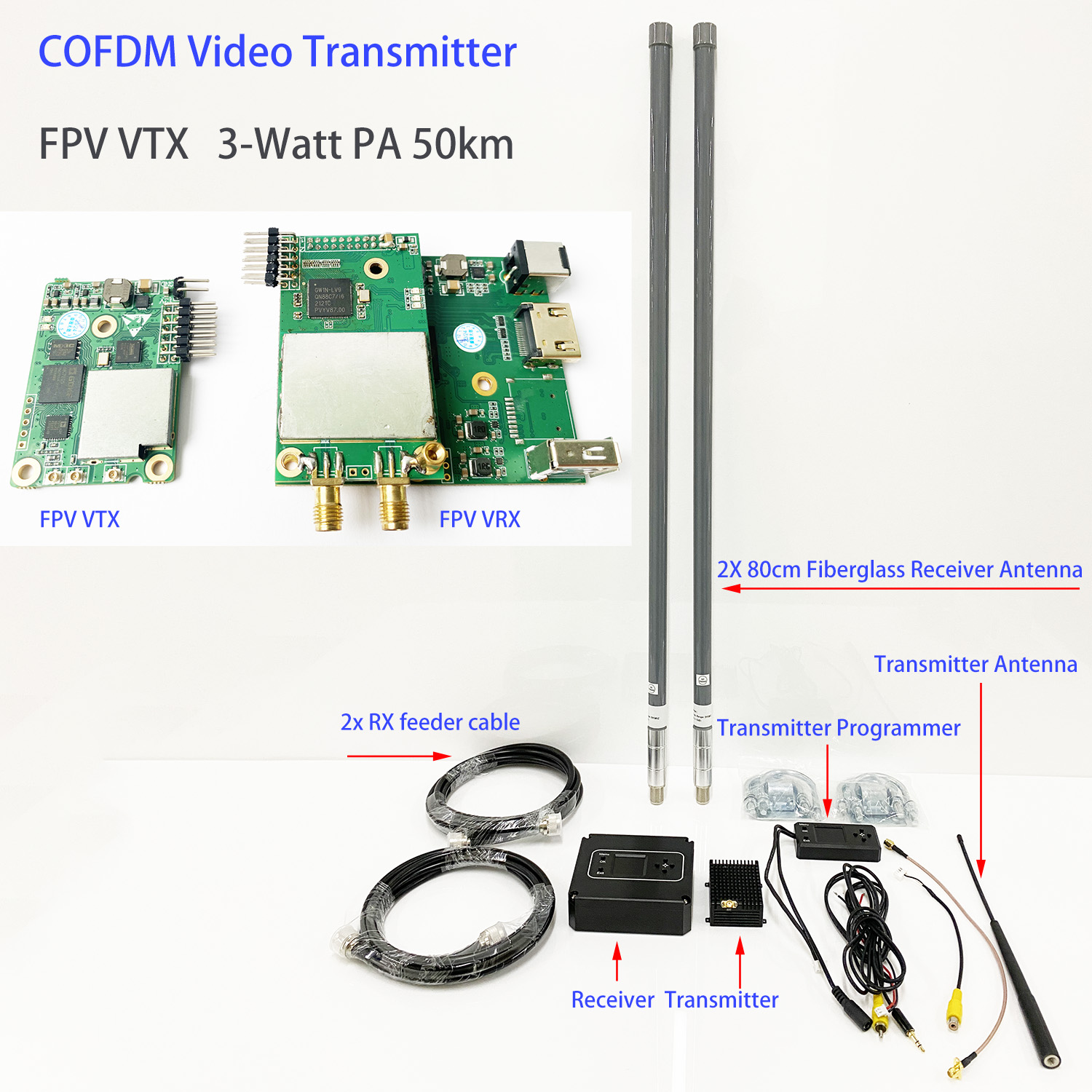
Table of Contents Toggle OverviewFeaturesInterfaces & ConnectorsUse Cases & ApplicationsPerformance & Range ExpectationsConfiguration & ControlComparisons / AdvantagesTechnical Specification SummaryConsiderations & Tips DIY UAV drone video data radio link module IP TTL Sbus Overview Introducing the DIY UAV drone video data radio link module support IP TTL Sbus — a high-performance, bidirectional transceiver module combining video transmission, data telemetry, and radio control for UAVs, drones, or any aerial/ground robotics platform. Engineered for long-range use, this module delivers robust communication links, offering flexibility, reliability, and scalability in demanding environments. Whether you’re doing FPV video, remote sensor telemetry, or controlling multiple nodes in a mesh network, the IS1681 is designed to be a powerful all-in-one communications solution. Features Full-Duplex / Bidirectional LinkThe IS1681 supports two-way communication, meaning it can simultaneously handle downlink (video data from UAV to ground station) and uplink (control, telemetry, commands) streams. This ensures low latency remote control as well as real-time feedback. Flexible Frequency BandsSupports operation on multiple RF bands: ~800 MHz (806-826 MHz), ~1.4 GHz (1428-1448 MHz), and ~2.4 GHz (2402-2482 MHz). This flexibility allows system integration in crowded RF environments, and options to optimize for longer propagation (lower frequency) or higher bandwidth (higher frequency) depending on mission needs. Selectable Bandwidth & ModulationMultiple channel bandwidth options are available: 3 MHz, 5 MHz, 10 MHz, and 20 MHz, permitting trade-offs between range, data throughput, and robustness. Modulation schemes include QPSK, 16-QAM, and 64-QAM, automatically adapting to channel conditions. Long-Range Transmission CapabilityIn line-of-sight (LOS) conditions, the module delivers ranges up to ~17 km without an additional external power amplifier. With added PA/amp modules, ranges extend significantly, depending on power and antenna configuration. The module’s max RF power is 25 ± 2 dBm by default. High Sensitivity ReceivingThe module exhibits excellent receiving sensitivity across all supported bands. For example, at 1 Mbps data rate, sensitivity hovers around –106 dBm to –108 dBm depending on the band. This helps in maintaining communication integrity over longer distances and in noisy environments. Multiple Interfaces & Transparent Transmission Dual Ethernet ports (one 4-pin ZH connector, one RJ45) for IP networking / transparent Ethernet bridging. Multiple UART / TTL serial ports (3 x UART/TTL, including one dedicated control/data channel). Audio input and output (line/mic in, earphones/speaker out) with on-board codec for two-way audio communication.This assortment of I/O allows seamless integration with onboard flight controllers, video encoders, remote user interfaces, etc. Network Modes & ScalabilityThe IS1681 supports multiple networking topologies: point-to-point, point-to-multipoint, star network, relay/repeater/extender, and mesh network (IP mesh). Up to 16 access nodes can connect to a central node in some configurations, sharing bandwidth as per link capacity. This is useful for distributed systems, large surveillance setups, mapping swarms, etc. Security & Management AES-128 encryption ensures data privacy and resistance to eavesdropping. Management can be performed via Web UI or UART commands. Uplink/downlink stream ratios are configurable, allowing control of how much bandwidth is assigned to video vs telemetry vs control signals. Physical Specs, Power & Robustness Operating temperature: –20 °C to 65 °C; storage temperature: –40 °C to 80 °C. Wide input power range: typically 7-30 V DC, consuming < ~4.5 W in normal operation. Compact form factor (≈ 58×64×13 mm), weight ≈ 32 g. Dual antennas (main & aux) supporting MIMO type reception. DIY UAV drone video data radio link module IP TTL Sbus Interfaces & Connectors Here’s what you’ll find on the module, and how you can hook it up: Power input: XT30PW-M connector, accepting 7-30 V DC. Ethernet ports: One port via 4-pin ZH1.5 mm connector; One RJ45 port (also supports transparent IP traffic). Serial / UART / TTL ports: Multiple ports at TTL 3.3 V, including one that can serve control or data role. Audio I/O: 4-pin PH1.25 mm connector, with line/mic in, line/speaker out, for two-way audio use. Antennas: Main TX/RX port (IPEX), secondary reception-only antenna (IPEX) for diversity. USB (Micro USB): for firmware upgrades. Control switches / signals: For external Power Amplifier (PA) enabling/disabling etc. Status LEDs for power, node-mode, link strength. Use Cases & Applications This module is highly versatile. Some example applications include: FPV & Live Video Streaming: Real-time transmission of video feeds from UAVs for piloting, cinematography, inspection, etc. Thanks to high throughput and low latency, usable even under demanding aerial scenarios. Teleoperation / Remote Control: Not just video, but two-way data link supports remote flight control, parameter updates, telemetry feedback, etc. Mesh & Multi-Node Installations: For large areas or swarms of UAVs, ground robots or sensor networks, the mesh networking capability means nodes can relay through each other, extending coverage or providing redundancy. Disaster Response / Search & Rescue: The capability to transmit over 15-30 km (or further with PA), combined with audio communications, makes this module suitable for scenarios when teams are spread over large distances and need reliable live comms video. Industrial / Agricultural Monitoring: Long-range monitoring of fields, pipelines, power lines, or remote infrastructure. Real-time video plus sensor data over robust links. Security & Surveillance: Ground based or aerial surveillance systems that demand encryption, robust signal under interference, and flexible deployment of multiple receiver nodes. DIY UAV drone video data radio link module IP TTL Sbus china Performance & Range Expectations Without external power amplification, users can expect reliable LOS ranges up to 15-17 km (air-to-ground). With suitable antennas, line of sight, and favorable conditions. Adding a power amplifier (2W, 5W, 10W) can extend range significantly, depending on antenna gain, terrain, and regulatory limits on radiated power. Signal quality, bandwidth, and modulation adapt automatically to environmental conditions to maintain link performance; worse conditions reduce modulation order or bandwidth, but preserve the link rather than dropping. Configuration & Control Web UI: via the Ethernet or IP network, you can access configuration menus: select frequency band, modulation, bandwidth, frame modes, streaming ratios (video/control), encryption settings, etc. UART / Serial Control: For integration with autopilots / flight controllers, remote firmware updates, in-field adjustments of settings. Switch for external PA: Some models include a mechanism for controlling an external power amplifier (on/off), for instance to save power when full power isn’t needed. Comparisons / Advantages What distinguishes the IS1681 from simpler, one-way video transmitters or basic RC control links: Bidirectional data & video rather than just one-way video/telemetry. Support for full network topologies (mesh, relay networks) rather than simple point-to-point only. Multiple frequency options allow adaptation to regulatory and environmental constraints. Transparent IP networking means it can carry arbitrary IP traffic (e.g. video, telemetry, control) rather than being limited to specialized proprietary protocols. Integrated serial/TTL interfaces make it easier to hook up flight controllers, cameras, data loggers without needing many converters. Technical Specification Summary Parameter Specification Frequency Bands 800 MHz (806-826 MHz), 1.4 GHz (1428-1448 MHz), 2.4 GHz (2402-2482 MHz) Bandwidth Options 3 / 5 / 10 / 20 MHz Modulation QPSK / 16QAM / 64QAM (adaptive) RF Output Power ~25 ± 2 dBm (default) Sensitivity ~–106 to –108 dBm for 1 Mbps in supported bands Maximum Data Rate ~30 Mbps @ 20 MHz bandwidth (shared among nodes) Networking Modes Point-to-Point, Point-to-Multipoint, Star, Relay/Repeater, Mesh / IP Mesh Interfaces Dual Ethernet, 3 UART/TTL, Audio I/O, USB for firmware Antennas Dual antennas: main (TX/RX) auxiliary (RX only) Power Supply 7-30 V DC, < ~4.5 W typical Physical Size / Weight ~58 × 64 × 13 mm; ~32 g Operating Temp. –20 °C to 65 °C; Storage: –40 °C to 80 °C Considerations & Tips Regulatory compliance: When using higher transmit powers or certain frequency bands, ensure that operations are permitted in your area. Licensing, power limits, and band usage differ by country. Antenna setup: To get the advertised range, high-gain antennas, proper mounting (elevated, clear LOS), and matching connectors are essential. Diversity via the auxiliary antenna helps in multipath or blocked signal scenarios. Powering & heat dissipation: Even though module power consumption is modest (~4–5 W), including any PA will add heat. Good airflow / heatsinking is needed especially if enclosed. Use the onboard LED indicators to monitor link quality. Firmware & updates: Keep firmware updated for best performance and bug fixes. Use USB or Web UI as provided. Bandwidth allocation: If using mesh or multiple nodes, bandwidth is shared—so ensure the system design accounts for video telemetry control demands, and allocate uplink/downlink ratios as needed. Conclusion The UAV Wireless Video Data RC Control Link Module is a versatile, powerful, and robust solution for those wanting more than just simple video: it gives you full two-way communications, networking modes, flexible interfaces, and high performance over long ranges. Whether you’re a developer building custom UAV platforms, a FPV pilot needing reliable long-distance video, or a systems integrator deploying swarm or distributed sensor solutions, this module offers an excellent balance of capability, flexibility, and integration ease.
Your custom content goes here. You can add the content for individual product